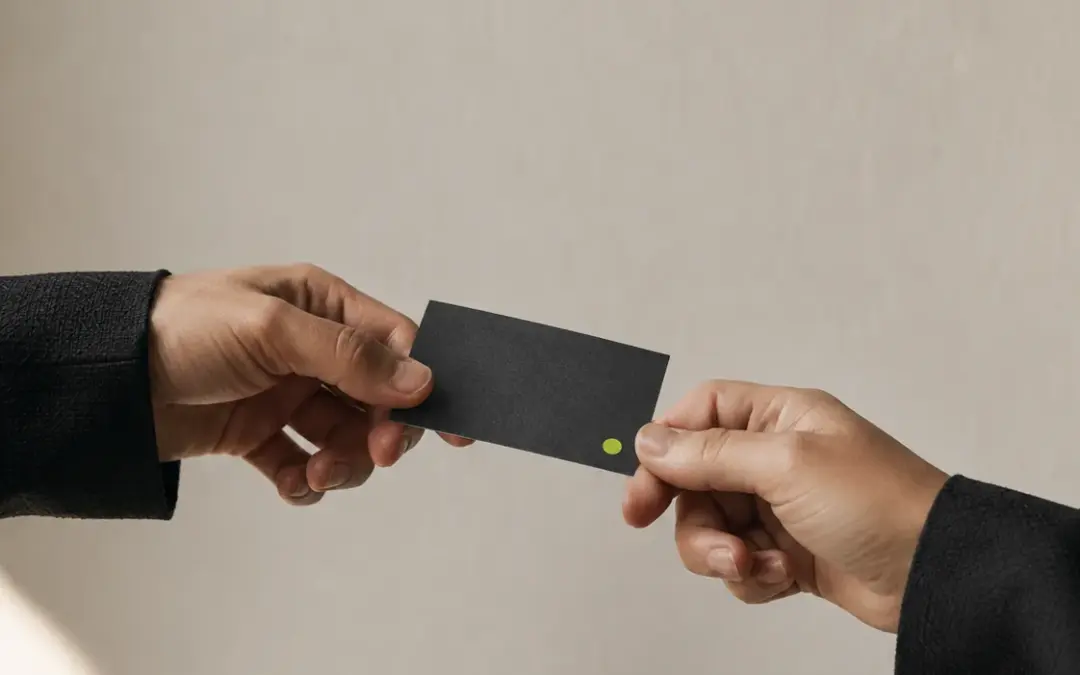
The paper business card has a problem no design can fix: it ends up in the wrong hands. The person who receives it has to transcribe it, photograph it or — in most cases — lose it. Event studies have been quoting the same uncomfortable number for years: the vast majority of paper cards are thrown away within the first week.
An NFC business card flips the flow. Instead of handing over an object for the other person to keep, you tap an object against their phone — and the phone does the work.
How an NFC card works, without the magic
NFC (Near Field Communication) is the technology you pay for coffee with. The card carries a small passive chip — no battery, nothing to charge — that the phone powers by induction when they come within a few centimetres of each other.
The chip stores exactly one thing: a link. On tap, the phone opens your contact page in the browser it already has. No app on either side — that is the difference that makes the gesture work at a trade fair, with a stranger, in three seconds. We explain the process in detail in how it works.
NFC card vs QR code vs paper
The QR code shares the no-app advantage, but it demands framing a camera under trade-fair lighting, and it usually lives on a screen or on paper — the physical object is disposable again. The NFC card is a gesture (tap), not an operation (aim, focus, click), and premium plastic survives years of pockets.
The structural advantage over paper is a different one: an NFC card is a link, not a print run. Changed your title, your phone number, your company? The page updates; the card sitting in your contacts’ wallets becomes retroactively correct. No print shop does that.
What happens on the other side
The person you tap sees your page — your colours, your logo, your links — and with one more tap downloads your vCard: you land in their phone’s contacts natively, on iOS and Android. You were saved before the conversation ended.
And for companies?
For teams, the NFC card solves the problem paper doesn’t even know it has: the lifecycle. Someone leaves the company and their institutional card keeps circulating, speaking in its name. With managed cards, the organization revokes in one click or forwards to the successor — the business contact doesn’t die with anyone’s departure.
Want to see yours? Talk to us — it takes about a minute, we timed it.