
Print shops will happily sell you “eco-friendly business cards”: recycled stock, seed paper, vegetable inks. Lovely — and the card still hits the bin within the week, now with a clearer conscience.
This article does the waste math properly, says what an NFC card fixes — and, because honesty is our brand policy, what it doesn’t.
The numbers the whole category quotes
Industry estimates put it at around 27 million business cards printed per day — close to 10 billion a year — with 88% thrown away within the first week (compiled by CreditDonkey from Adobe data). Let’s be clear: these are American estimates, repeated for years, audited by nobody. Which is why we prefer math you can redo on a napkin.
The napkin math

A standard card is 85 × 55 mm. In 350 gsm stock, that’s about 1.6 g per card — a box of 500 weighs around 800 g. If the industry numbers are anywhere near true, that’s thousands of tonnes of cardstock a year travelling from the print shop to the bin.
But the number that matters is yours. The waste trigger isn’t handing a card over — it’s the reprint: new title, new phone number, new logo, a typo. The whole box goes out with 460 cards still in shrink wrap, and the print shop thanks you for your loyalty.
Recycled paper fixes the fibre. Not the cycle.
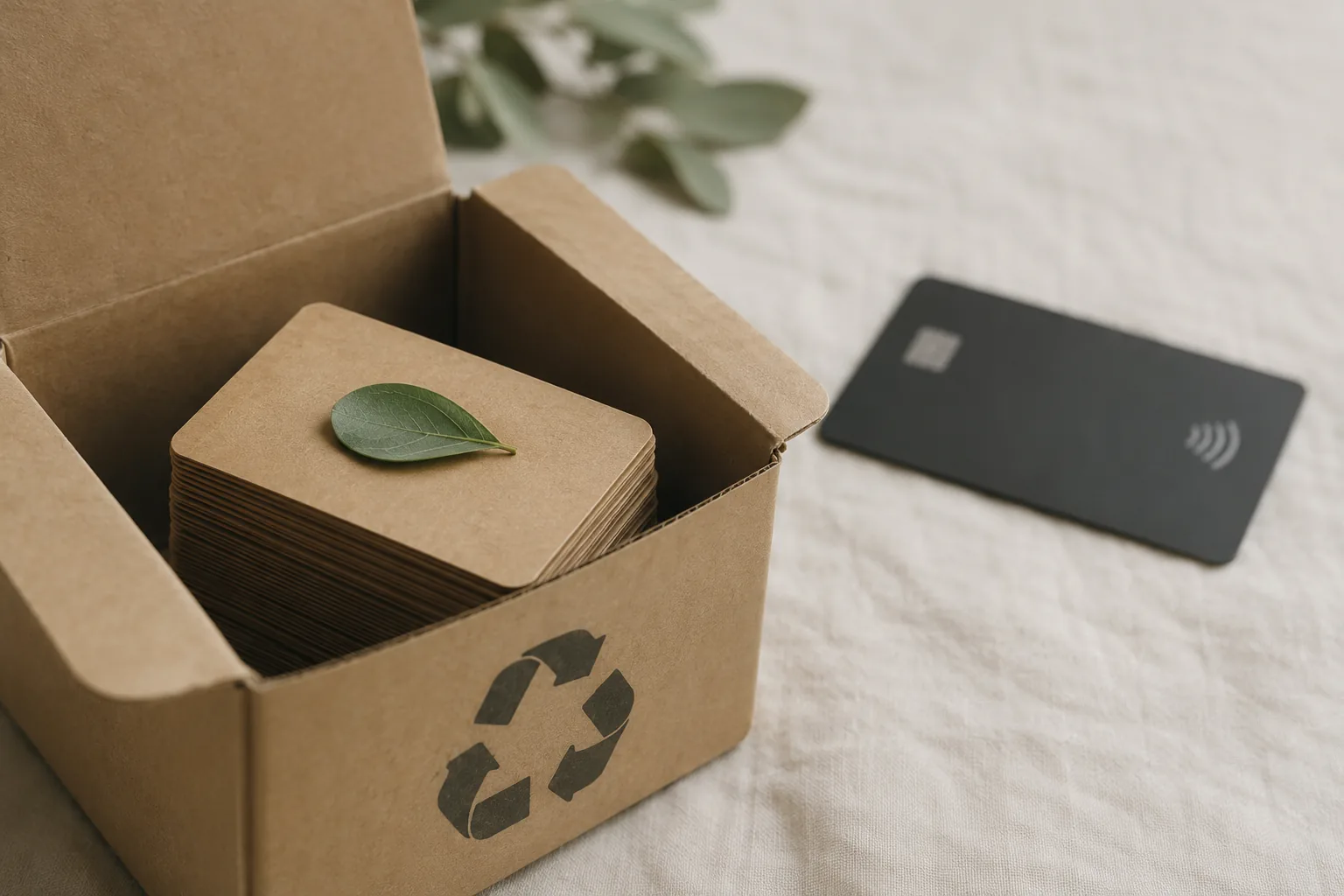
The problem was never what the card is made of; it’s the ritual: print in bulk → hand out a few → bin the rest → reprint at the next change. A recycled card inside the same cycle is the same waste, with a certificate.
The honest part: an NFC card is electronics
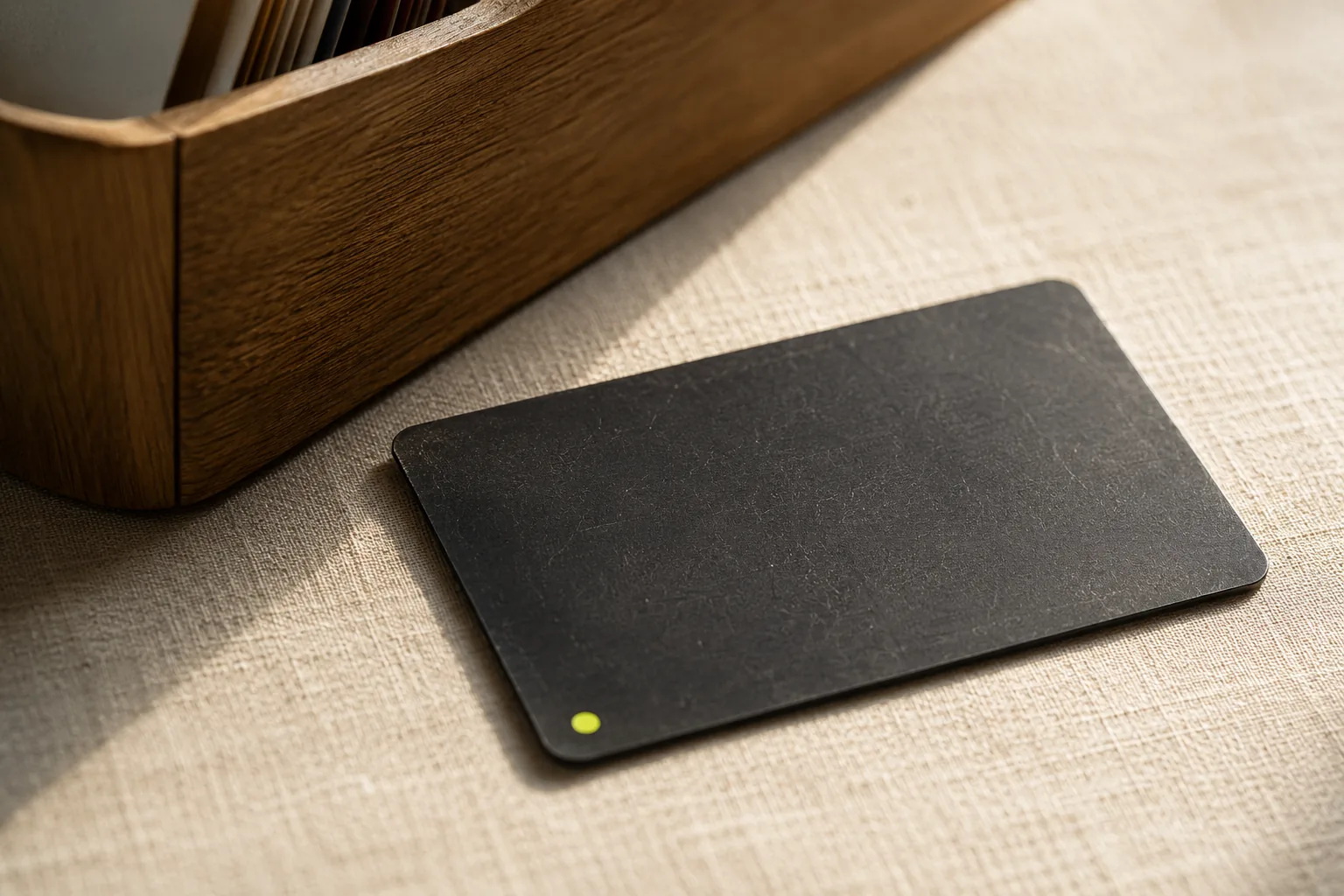
An NFC card has a chip and an antenna. It doesn’t grow on trees, and we won’t pretend it’s zero-impact — anyone who claims that is selling you something else.
The argument is different, and better: substitution and lifespan. One card, years of use. Your details live on a page that updates — change your title, number or brand and the plastic in your contacts’ wallets stays correct, retroactively. Reprint count: zero. And when the card genuinely dies, it’s electronic waste: take it to a collection point, not the household bin. We did say no greenwashing.
For organisations: a number you can actually report
Sustainability reports want defensible numbers, and “we eliminated business-card print runs” is small but has a rare quality: it’s true, documentable and audit-proof. With function cards, personnel changes stop triggering print runs by construction — the card belongs to the function, and what changes is the page.
Sustainability, here, isn’t the product. It’s the side effect of doing the right thing: one durable object and a page that updates.
Ready to retire your last box of 500? Talk to us — it takes about a minute, we timed it.